Sunday 11 November 2012

Thursday 16 June 2011
Flax in the Deverill Valley
 A field of flax in bloom
Looking like a lake in the mid-May sunshine, a field of flax in bloom in the valley just to the west of Kingston Deverill
Sunday 20 December 2009
Happy Christmas.

A Wiltshire Crib Scene,
photographed at the display of work by local Guides and Brownies at The Library in Salisbury.
This charming and original take on the theme won the Senior Guides section of the competition, and who could disagree...
photographed at the display of work by local Guides and Brownies at The Library in Salisbury.
This charming and original take on the theme won the Senior Guides section of the competition, and who could disagree...
Thank you Kath Caldwell and Rachel Vernon of The Westbury White Horse Guides, your work raised a smile and gained the Guides some loose change in the collection tin.
Thursday 11 December 2008
It's a turkey !
New posts are below this post, which will remain at the top of the page:
last post 11 DECEMBER '08
Our county flag.
last post 11 DECEMBER '08
Our county flag.

How things happen, ..... if you are not careful !
A chap named Mike Prior runs a printing company and prints and sells flags.
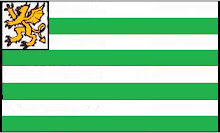
There is an flag, established by custom, for Wiltshire.

The observant will note that the elements of the county arms (granted 1937) are incorporated in the flag, the green and white bars, representing the grass and chalk which defines the geography of the county, and the wyvern which is the symbol of Wessex of which Wiltshire is a large part.
However this chap has developed a great marketing ploy.
Invent your own flag, and con the gullible into giving it official status
Invent your own flag, and con the gullible into giving it official status

Mike Prior, 61, of Ashton Street, wrote to seven of whom he considered the most prominent people in Wiltshire about his design for a county flag, featuring the previously extinct Great Bustard. Mr Prior, managing director of Bath Midway Litho Ltd in Duke Street, received confirmation on Monday that planning permission for him to fly the flag in his garden had been granted. Like many other counties of England, Wiltshire did not have its own flag, until 05/06/07, when the new flag was accepted and raised at County Hall in Trowbridge.
Among the 'prominent people in Wiltshire' quoted on his website are Robert Key, MP for Salisbury and Andrew Murrison MP Shadow Defence Minister. I have contacted these two prominent people and have been assured that their comments are entirely personal. I have contacted a councillor regarding the following ( with my added bold notes) that seems to give official recognition to the flag selling scam. ( I await a reply.)
County flag flies at County Hall
A Wiltshire county flag will be flying high at County Hall next week (June 5) at a special ceremony with Wiltshire County Council's leader and chairman.Leader Jane Scott and chairman Judy Seager will attend the event at 9am on Tuesday, June 5, along with Mike Prior who came up with the design of the flag.
Flag enthusiast ( and person hoping to make money by selling flags ) Mike Prior of Trowbridge said: "I have always loved flag flying and I thought it would be good to fly something other than the Union Flag or national flags.(he probably loves making money even more)
"I have done my research and found there wasn't a flag for the county so I thought why not design one?" ( didn't even bother with this search in his extensive research or this )
Mr Prior's daughter, Helen Pocock, a graphic designer, came up with a design for the flag using the Great Bustard as the centrepiece. The bird was previously extinct in England, but is now part of a 10-year breeding programme on Salisbury Plain.
The white colouring in the flag is to represent peace, while the green can mean joy, hope or safety. A circle of six rocks is also featured in the centre of the flag, representing both the stone circles of Avebury and Stonehenge and the six counties on to which Wiltshire borders. ( oh for goodness sake stop)
Jane Scott said: "We are pleased that we are able support this project. People in Wiltshire are rightly proud of their beautiful county and this flag will help to reinforce a sense of community identity." ( people in Wiltshire would be pleased to be consulted, Wiltshire people are proud enough of their county and heritage not to have this flag foisted upon them )
Only a handful of counties in England have a flag of their own and Mr Prior hopes the Wiltshire flag could eventually become well used. ( same level of research as previously exhibited )
The flag will be flown at the front of County Hall, Trowbridge, at all times, except on official flag-flying days when the Union Flag will be flown and on days of county council meetings when the council's own flag will fly.
The flag looks like a flag from a banana republic or the 'house flag' of Bernard Matthews
To try to fob it off as a official flag for our historic county is an insult. The intended association with the Bustard, extinct in the county since the 1830s when my most of my great great grandfathers were working on the land on which it roamed, is silly. The bustard is not in the minds of even Wiltshire people and to most the representation of it on the flag would bring to mind turkey twizzlers.
There are icons of Wiltshire that would be recognised worldwide; the White Horses on the rolling downland, the beautiful Salisbury Cathedral, the icon of all icons Stonehenge and the Moonrakers, .....
....as I said, the flag is a turkey. Time to get it removed from any official or semi-official status; it is an abomination and an affront to any true Moonraker.
Update.
A correspondent has reminded me that the Moonraker Legend hinges upon a sharp witted native putting one over officialdom. We don't have the excisemen any more but we do have councillors, who are just as gullible it seems.
The language of Wiltshire
For those who have not heard the dialect spoken...........
An example of my native language, an anecdote
in the tradition of The Moonraker Story
sorry, link no longer works
Friday 17 October 2008
Teffont again.
Previous photographs show the village of Teffont Evias, these now posted show the other end of the village, Teffont Magna, lying to the north of Teffont Evias.
 The small church dating from the late 13th century, like many old places the beauty and symmetry has been ruined by the inept placing of modern street furniture. The stone parapet to the gables hint that the roof was originally of thatch.
 A bobbed and fringed cottage looking open mouthed in amazement or surprise.
 The house has a plaque built in to the gable end referring to the Fitz family, the house a jumble of additions and alterations over the years.
  The Post Office once occupied the utilitarian lean-to extension to the cottage.
 The stream runs through the village adding greatly to the charm. Trout lurk in the shade under the bridges.
 Tyres from farm carts propped against a tree which must have been but a sapling when they were placed there. Someone shares my enthusiasm for "tidying up".
 A cob wall built of rammed layers of locally dug soil bound with the addition of fibrous plant material such as straw, heather, bracken or whatever found locally. A cheap method of walling which can endure for centuries if its head and feet are kept dry.
 Graffiti on the walls of the church, a quick look at the 1841 census leads me to believe either a Frederick Mullins or a Frederick Macey should have been "assisting with enquiries".
Friday 5 September 2008
Compton Chamberlayne

Lying to the west of Salisbury in the Nadder Valley is the tiny village of Compton Chamberlayne. A couple of dozen houses and a church in a wooded coombe to the north of the A30 road that runs from Salisbury to Shaftesbury. During the First World War troops were encamped in the fields nearby to the south east before heading off the the carnage of the trenches. Some from Australia, didn't make it that far but died of illness and were buried in the village graveyard.

 I suppose if you are to die, a grave in this peaceful part of Wiltshire, your grave site flanked by a traditional cottage must be preferable to anonymity of a grave among thousands near the battlefield. Troops carved an outline of their homeland in the turf of the downland on the other side of the A30 and can be seen here
The village church nestles on the side of a slope next to 'the big house' of the village; it was constructed during the 13th century, at about the same as the cathedral at Salisbury.

Grave stones lean as if tired of their hundreds of years standing under the yew. They have not yet suffered the indignity of being reset and tidied by the health and safety crowd.

If you head north towards Baverstock, along a valley laid out as parkland, you will come to an old bridge over the Nadder, the river, coloured by recent rains and well stocked with fat trout, heading off to join the Avon at Salisbury.

The old bridge with its 'kickstone', so shaped and positioned to 'kick' the wheel of a cart over away from the parapet of the wall so that the capping stones are not displaced and knocked ito the river
Subscribe to:
Posts (Atom)